
Feather Plucking in Parrots – Professional Help and Advice
Together, let’s enrich your parrot’s world and take their mind off their feathers.
We visit parrots at home across Birmingham, Coventry, Wolverhampton and Stoke-on-Trent, and across the West Midlands, Staffordshire and Shropshire. Virtual consultations are available wherever you are.
Feather plucking in parrots is a deeply distressing issue, both for your pet and for you as an owner. It signals a manifestation of physical or emotional discomfort, potentially impacting your parrot’s overall wellbeing. As a parrot behaviourist, Zoe empathises with the anxiety and helplessness you may feel witnessing your feathered companion engage in this self-harming behaviour. The issue is complex, often tied to an inability of the domestic environment to satisfy a parrot’s instinctual needs.
Get in Touch
Speak with one of our team for more information about how we can support you.
Compassionate Help for Feather Plucking in Parrots
Feather plucking in parrots can be deeply upsetting, and it is important to know that this is not your fault and you are not alone. Zoe’s role is to offer calm, expert guidance to help you understand why feather plucking in parrots develops and what your parrot is communicating through this behaviour. By looking beyond the visible symptoms, she helps you gain clarity and reassurance at what can be a very worrying time.
When supporting cases of feather plucking in parrots, Zoe takes a thorough and compassionate approach, exploring emotional, environmental, and behavioural factors that may be affecting your parrot’s wellbeing. She will provide practical, tailored recommendations designed to reduce stress, improve welfare, and support lasting change. The goal is to help restore your parrot’s comfort and quality of life, while also bringing greater calm and confidence back into your home.

Meet Our Parrot Behaviourist

Zoe Demery
Clinical Parrot Behaviourist
I have a doctorate in parrot cognition, and I am so far the only independently accredited clinical parrot behaviourist in the UK (CCAB). I am also a Chartered Member of the British Psychological Society, registered with ABTC, and certified by IAABC as a parrot behaviour consultant. I am moreover very happy to be recognised as an Allied Professional Member of the Association of Avian Veterinarians.
I am a proud committee member of FAB Clinicians. I have given talks and published about these fascinating birds to a wide range of audiences around the world. Since starting practice in 2012, I have helped dozens of birds and their caregivers around the world better understand each other. I also mentor budding avian behaviourists.

“My cockatoo Kiwi’s feather plucking was heart-wrenching. Zoe provided practical solutions, filled with empathy. Gradually, Kiwi improved – happier, active, and her feathers returning. This challenging journey, eased with expert support, led to Kiwi’s rewarding transformation. I can’t recommend Second Nature Behaviour enough for struggling parrot owners.”
Jonathan
All-inclusive Support With Feather Plucking in Parrots
If your parrot plucks their feathers, it’s important that you receive tailored support from a Veterinary Behaviourist or Clinical Animal Behaviourist. If you book a behaviour consultation with us, you receive a comprehensive behaviour modification plan and follow-up support package.
Initial Consultation
Initial Consultation
We visit you at your home in person or online, for an initial assessment generally lasting 2 hours and ideally, everyone in the household should be present.
Treatment Plan
We take a full and detailed case history. Together, we work out a treatment plan that is realistic and tailored to you and your flock’s needs.
Information Sheets
You receive relevant information sheets, which tie in with the behaviour plan for your bird.
Report
Soon after the consultation, a report is sent to you, which is later copied to your vet. This outlines the reasons behind the problem and highlights the key steps of the plan.
Follow-up Support
Follow-up Session
We schedule a 1-hour follow-up session about a month later, which is conducted via an online video link.
Email, WhatsApp or Check-in Calls
We are available for remote support via email and WhatsApp, or via weekly check-in calls.
Vet Behaviourist Input
If a Veterinary Behaviourist’s additional medical expertise is required during the case’s development, we integrate their advice into the plan.
Additional Follow-up support
More follow-up support is available as needed.
Invest £240
Get expert help from our parrot behaviourist
Or, fancy a £30 discount?
Book a supervised consult to allow a budding behaviourist to lead your consultation under the watchful eye of one of our senior behaviourists.
Mango’s Story
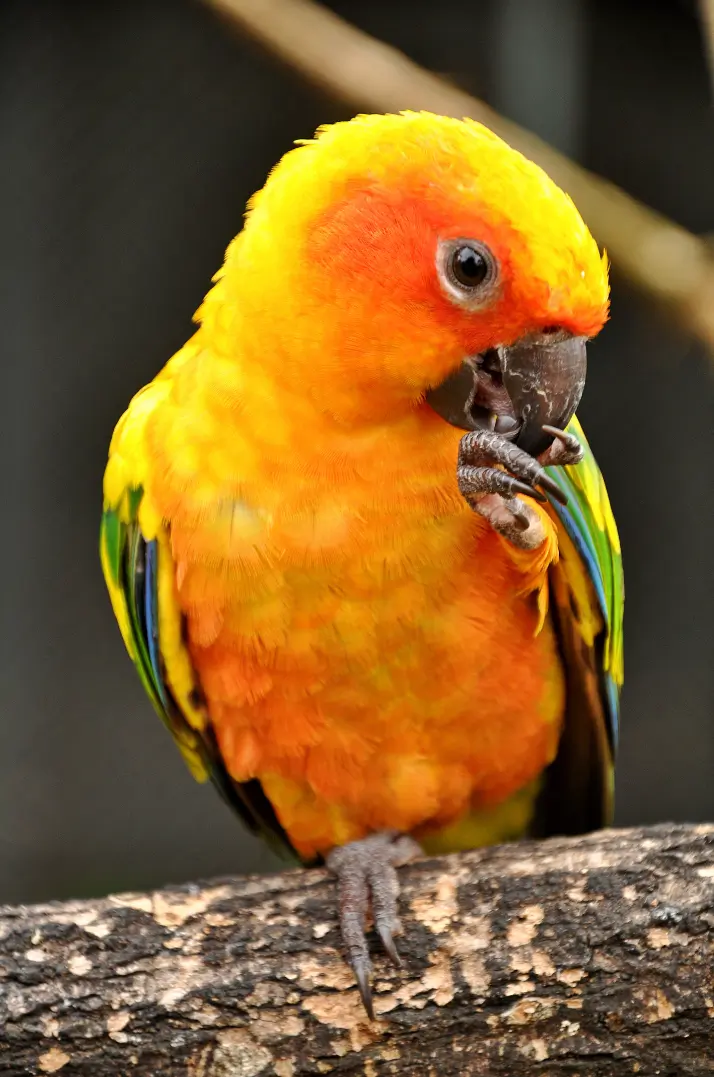
Mango, a playful Sun Conure, started showing signs of distress by repeatively picking at his feathers. His owner, Emily, together with Mango’s vet ruled out possible skin disease and hormonal factors, then they sought my help.
By evaluating Mango’s habitat, diet, and daily routine, we pinpointed potential stressors and nutritional deficiencies. A comprehensive plan was put in place, involving improved diet, stimulating toys, training plan and a consistent routine to minimise stress. Progress was slow but steady, with Emily’s unwavering commitment playing a crucial role.
Over time, Mango showed noticeable improvements – he interacted more with his toys, his spirits lifted, and feather plucking decreased. In three months, the transformation was evident – Mango’s feathers started growing back, his vocalisations increased, reflecting a happier bird. Mango’s journey demonstrates the impact of patient, informed care.
Next steps
1. Vet referral
Shrieking is sometimes due to hormonal or other physiological issues, so we need to address these first
2. Booking
Online or by giving us a call on 0121 299 0188
3. History form
Give us some background about your bird and your relationship
4. Consultation
Let’s get started on the plan to dealing with your parrot’s behaviour
Recommended
by vets
you may be able to
claim on insurance

As an avian vet, I’ve observed significant improvements in parrots guided by Zoe’s advice. Her approach is tailored, understanding avian needs and behaviours. The resulting changes in my patients’ overall health and happiness are remarkable. I wholeheartedly recommend her services to any parrot owners facing behavioural challenges with their companion birds.”
Charlotte at AmbiVets
Book a consult
get expert help now
Ella the vet

Nicki the vet

Zoe has worked absolute miracles on cats, dogs and parrots and given pet owners chance to build a more understanding and deeper relationship with their pets. I have loved seeing clients back with smiles on their faces after implementing Zoe’s instructions in order to manage the issues they have had for a long time.
Behavioural issues are very complex and with a communication barrier from man to animal creating an even more difficult task, a highly qualified behaviourist with lots of experience is absolutely invaluable and for me, Zoe is just that. An invaluable asset to my work as a vet to ensure you can get the best out of your relationship with your family pets.
I will always recommend 100%. Thank you for everything, I look forward to continuing to work with you.
Jules & Linda

These are wonderful people, really professional, compassionate and knowledgeable. They helped me during a crisis with my African Grey and their kind, factual, knowledgeable service was excellent. Can’t recommend enough.
RSPCA Brighton

Thank you for all your help with our 3 feathered residents, Billie, Dave and Alfie. As a charity we are extremely grateful for your generosity and wisdom! ~ Jade Spiro
Lily & Kiki

You have been wonderful to work with – clearly such a caring person. You have turned Kiki’s life around.
Nardie’s Flock

Even the budgies who were easily spooked respond well to me now and really love their fly time!
When they are out they know the drill and do very well at coming in and out of the enclosure. Thank you so much Zoe for sharing your expertise and giving me so many tips for improving my budgies’ lives. I have never liked the idea of birds in cages, and when I decided to take on these rescues I really had to learn quick how to give them the best possible environment. Thanks to your help they are healthy, happy, noisy, and no longer trying to breed all the time!
Nardie
Cocky & Timothy

We couldn’t be happier with the changes we’ve seen in our feathered family member – thank you Zoe. You’ve worked wonders.
RSPCA Brighton

Thank you for all your help with our 3 feathered residents, Billie, Dave and Alfie. As a charity we are extremely grateful for your generosity and wisdom!
If you are looking for expert guidance regarding your parrot’s feather plucking, contact us to get started.
Let’s get started
Give us a buzz
FAQ
Have a more general question? Check out our general FAQ.
Prefer to chat things through a bit more?
Contact Us
Give us a buzz by email or phone
0121 299 0188
Can I just get some quick advice about my parrot? It’s not a very big problem.
Parrots are very complex for such little creatures. They’re very intelligent and social animals that require a lot to keep them busy. Even small behaviour issues can turn out to be at the root of something greater, so they take a while to resolve. Unfortunately, we do not offer telephone or email consultations, but you can certainly come along to one of our clinics if you don’t want a full home visit consultation. It is not necessary to bring your parrot to the clinic, but please bring with you all the recordings requested. If following your questionnaire, our behaviourists think a more in-depth investigation is required, we will let you know before your appointment. Also, have a look at our general enrichment service.
My parrot isn’t registered with any vets – what should I do?
It is still very important to obtain a referral from a vet, but it should be from an avian vet, or you can look for vets advertising exotic pet care. In the Birmingham area, you could consider Amicus Vets in Solihull, or the Manor Vets branch in Edgbaston.
How can Second Nature Behaviour help me?
In the treatment of pet behaviour problems, it takes time to establish cause and develop treatment plans that are suitable to different owner’s circumstances. We are experienced and well-qualified pet behaviour counsellors, who, on referral from veterinary surgeons, are able to offer the time and expertise necessary to achieve these objectives at an affordable cost.
What sort of problems can Second Nature Behaviour help me with?
The range of behaviour problems exhibited in dogs, cats and parrots is varied. It includes aggression, destructiveness, toileting problems, marking, spraying, self-mutilation, vocal behaviour, nervousness, car travel, livestock chasing and general control. We can offer help with all of these. You can see each of our services on our key facts pages.
If you are seeking general training (e.g. to perform tricks on cue) or socialisation for your pet, then we recommend seeking an ABTC registered Animal Training Instructor.
How do I book an appointment?
Contact us for a no obligations chat. After you have been referred by your veterinary surgeon, you can phone us on 0121 299 0188 to discuss the details and costs, or book online here. You can access the referral form here, or your vet can make the referral online here.
Why should I choose Second Nature Behaviour?
Currently, in the UK anyone can practise as a clinical animal behaviourist whether they have any qualifications and experience or not. However, there are moves afoot to put pressure on the government to regulate the profession. The Animal Behaviour and Training Council (ABTC) is one body that aims to be an umbrella regulatory body for the sector. The Council is made up of several professional trade bodies, representing animal trainers and behaviourists to the public. The ABTC sets and maintains the standards of knowledge and practical skills necessary to be an animal trainer or behaviourist. The ABTC maintains national registers of appropriately qualified and experienced practitioners. A strict Code of Conduct and an annual CPD (Continuing Professional Development) requirement is expected from the professional trade bodies who are members of the Council.
The Fellowship of Animal Behaviour Clinicians (FAB Clinicians) is one such professional trade body, representing externally, independently accredited clinical animal behaviourists and those working towards independent accreditation. CCAB Certification (formerly the Association for the Study of Animal Behaviour Accreditation Committee) run the only independent scheme in the UK that assesses and accredits clinical animal behaviourists (‘CCABs’), who need to meet high educational, experiential and ethical standards. CCABs are recommended by the Royal College of Veterinary Surgeons and it is this certification that most pet insurance companies require.
Zoe Demery, who runs Second Nature Behaviour, has a doctorate in animal behaviour and a first-class honours degree in zoology and psychology. She is a Certificated Clinical Animal Behaviourist (CCAB) in dogs, cats and parrots, which means she is fully accredited with the ABTC and CCAB Certification. She is very happy to be a Certificated Member of FAB Clinicians. All of Second Nature Behaviour’s associate behaviourists are well qualified, but are still working towards CCAB accreditation. We all work according to the Code of Conduct set by the Fellowship of Animal Behaviour Clinicians.
Exemplary feedback from our clients indicates they are appreciative of someone having the time to listen to them and to deal with their pets’ problems. Second Nature Behaviour can offer years of experience, well-qualified, empathic behaviourists and great facilities. We are able to provide you with the tools and the time you need to develop thorough behaviour treatment plans that are suitable for your pet’s individual circumstances. We employ kind, reward-based techniques to resolve behaviour problems in a range of animal species.
What happens during the consultation?
Consultations are held on an appointment basis, either at one of our regional clinics or in your own home. If possible, all family members involved should be present. A history of the problem will be taken and your pet’s temperament assessed. After this, the counsellor will explain the motivation for the behaviour and devise a treatment programme to help you modify your pet’s behaviour.
What happens after the consultation?
Treatment programmes vary according to the nature and severity of the problem. Sometimes only the initial consultation, remote support and some hard work on your part work are sufficient. Moreover, a detailed report outlining the therapy will be sent to you and your veterinary surgeon. Further advice and aftercare are provided via further sessions and email for at least 6 weeks. Where treatment dictates it, or if you would prefer face-to-face support, a follow-up appointment can be arranged online. Alternatively, we can come to your home again. If you are a dog owner, we offer extensive face-to-face support following the initial consultation as part of our standard service.
Where does the consultation take place?
Although we are based in Birmingham, full consultations generally take place in your own home, allowing us to get a clearer picture of what is going on. We may also go out on one of your local walks.
We will travel to see cases up to approximately 1 ½ hours’ drive from Birmingham, including the West and East Midlands, Staffordshire, Shropshire, Warwickshire and Leicestershire. We also hold a monthly virtual Learning Clinic. For parrots and cats outside our normal service area, we can see you over online video link.
Do you offer behaviour consultations for species other than dogs, cats and parrots?
We focus on dogs, cats and parrots, the species our behaviourists are accredited for. For rabbits, small furries, reptiles or other birds, we recommend looking for a species specialist on the FAB Clinicians find a behaviourist directory.
I have multiple pets with problems within my household – does this mean you’ll charge double?
No, we won’t, although it often brings some complexity to the problem. For instance, if you have two dogs or a dog and a cat, we will charge our standard dog consultation price as we would for just one dog.
What kind of guarantees can you offer me? What if your suggestions don’t work?
We cannot guarantee a ‘cure’ or work miracles, but if between us we can diagnose what is going on, and if you are prepared to work hard, dramatic improvement is not unusual. The treatment plan is designed to be fluid. If what we initially suggest doesn’t seem to have much effect, then we will reassess and make some other suggestions about what to do.
How quickly will we see results? How long will it take to solve the problem?
There is no quick fix to any kind of behaviour problem. The treatment plan advised may produce results very quickly, but often it will take time, effort and commitment from all of the family to produce the improved behaviour. Always remember that your pet’s current problems may have developed over a long period of time, so it may take a particularly long time to improve. It really varies from individual to individual. However, support from us is ongoing, as you need it. Following your consultation, further advice is available by phone and email as you progress, or face-to-face if you require it. Progress is often faster with greater follow-up behaviour support within your own environment.
Will you tell me if the risks are too great? We are considering rehoming or euthanasia – you are our last hope.
It is important to have realistic expectations for what can be achieved. Behaviour problems take a lot of time and work to improve, sometimes never fully going away. However, very often at least some management strategies and techniques can be put in place to help with the behaviour. Your behaviourist will be able to discuss the different options with you once they have fully assessed your pet and your situation. The behaviourist will make a risk assessment as well as provide you with the treatment plan if necessary.